Visegrad Fund logoBlended Learning programme emblem

Between Nation, Region, and Union

Interdisciplinary Perspectives on European Integration

Course Overview

This course offers an interdisciplinary exploration of European integration through the perspectives of history, political science, International Relations, and social psychology. It examines the European Union as an identity and political project while situating it within alternative and complementary regional cooperation frameworks, particularly the Visegrad (V4) and Nordic models.

The course aims to investigate how different historical trajectories, geopolitical contexts, identity constructions, and political cultures shape diverse relational paths across Europe. By combining different disciplinary analyses, the program provides students with a multi-level understanding of integration processes and regional cooperation dynamics.

Course Structure and Way to Join the Course

The course is designed as a flexible blended learning program structured into four discipline-specific sessions, each delivered by an expert in the field. Each session has a duration of 90 minutes and follows a coherent intellectual progression in the following sequence:

  • Social Psychology
  • International Relations
  • Political Sciences
  • History

The full course content is available on the Moodle platform upon registration. Please prepare for each session by reviewing the corresponding Moodle materials.

To access the course materials, please click the link below, create a new account with the enrolment key "VisegradProject" before logging in to Moodle. Moodle Registration

Self-Paced Online Learning via Moodle

Complete the course independently via Moodle:

  • Access all learning materials and resources online
  • Progress through the course without direct teacher assistance
  • Engage with materials at your own pace

This format provides maximum flexibility and ensures that the course is accessible regardless of time constraints or location.

Moodle registration


Learning Outcomes

  • Analyze European integration from psychological, political, and historical perspectives
  • Evaluate the interplay between national identity and supranational governance
  • Compare theoretical frameworks across disciplines for understanding regionalism
  • Critically assess current challenges facing the European Union

Meet the Instructors

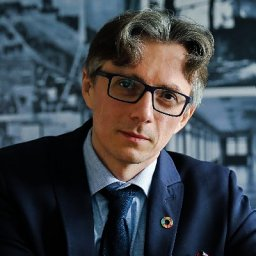
Portrait of Bernd Christoph Ströhm

Bernd Christoph Ströhm

Country Expert and Senior Research Associate at the Vienna Institute for International Economic Studies and Postdoctoral Teaching Fellow at the Diplomatic Academy of Vienna. His research focuses on Russian and Chinese geoeconomic influence in Central and South-Eastern Europe, Western Balkans' EU accession prospects, and Soviet/Russian dissent.

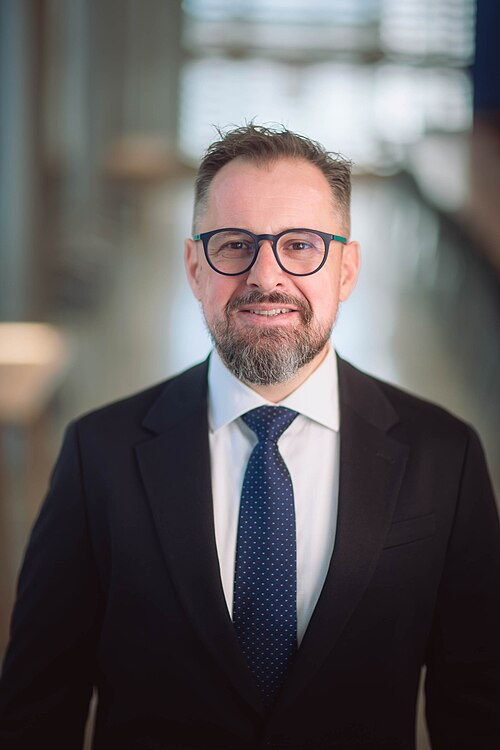
Portrait of Peter Stadius

Peter Stadius

Professor in Nordic Studies and Director of Centre for Nordic Studies (CENS). His research interests include image studies of the Nordic Region, regionalisms, minorities and identity politics, the cultural history of the Nordic Welfare State, and the dynamics of Nordic cooperation.

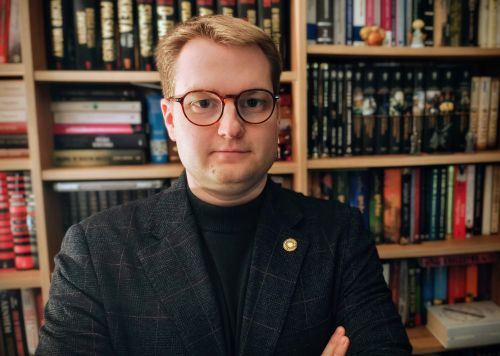
Portrait of Adrian Wójcik

Adrian Wójcik

Associate Professor of Social and Conservation Psychology at Nicolaus Copernicus University, and Vice-Dean for Research at the Faculty of Philosophy and Social Sciences. His research investigates pro-environmental attitudes and behaviours, linking them to political ideology, religion, social identity, and national narcissism.

Portrait of Michał Główczewski

Michał Główczewski

Assistant Professor of Social and Conservation Psychology at Nicolaus Copernicus University. His research focuses on collective memory, justice and identity. He is currently researching the need for historical significance.

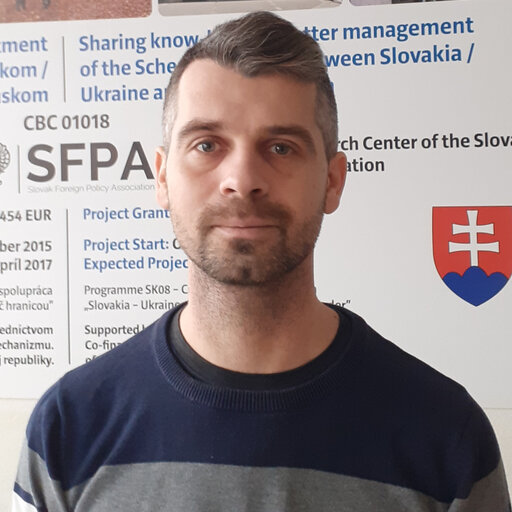
Portrait of Gabriel Székely

Gabriel Székely

Assistant Professor at the Institute of Political Science, University of Prešov (Slovakia). His research mainly concentrates on the relationship between the church and state during WWII, the Holocaust and issues of totalitarianism, as well as border studies, elections and public administration.

Portrait of Orsolya Vincze

Orsolya Vincze

Associate Professor of Social Psychology at the University of Pécs and Head of the Narrative Psychology Research Group. Her research focuses on collective memory and the narrative psychological approach to individual and group identity.

Portrait of István Tarrósy

István Tarrósy

Full Professor at the Department of Political Science and International Studies, University of Pécs, and Head of the International Directorate. Africa researcher and international relations expert, Director of the Africa Research Centre at the University of Pécs. His research focuses on North–South relations and the global transnational, interpolar system, examined through an interdisciplinary approach.

Portrait of Zoltán Vörös

Zoltán Vörös

Associate Professor at the Department of Political Science and International Studies, University of Pécs. His research focuses on the challenges facing the People's Republic of China in the 21st century and Chinese foreign policy.

Ready to Explore European Integration?

Secure your spot in this interdisciplinary course today.

Moodle registration